

Start with an honest look at what you're sharing
Two people, one room, and a deadline each — that's the reality of many British homes now. Before you buy a single box file, spend ten minutes measuring. Note where the plug sockets are, which way the door opens, where the radiator sits and how much light lands on each side of the room. A shared office works best when it's planned around the awkward bits rather than pretending they don't exist.
If you have a spare bedroom, you're lucky. If you're working from a corner of the living room or a section of a converted loft, the same rules apply — you simply have to be stricter about them. Decide which side of the desk belongs to whom and stick to it. Swapping seats every few weeks to be fair sounds generous, but it usually means neither person's setup ever settles.
Give each person their own storage zone
The biggest cause of friction in a shared office isn't noise — it's clutter with nowhere to go. Sort that and half your arguments disappear.
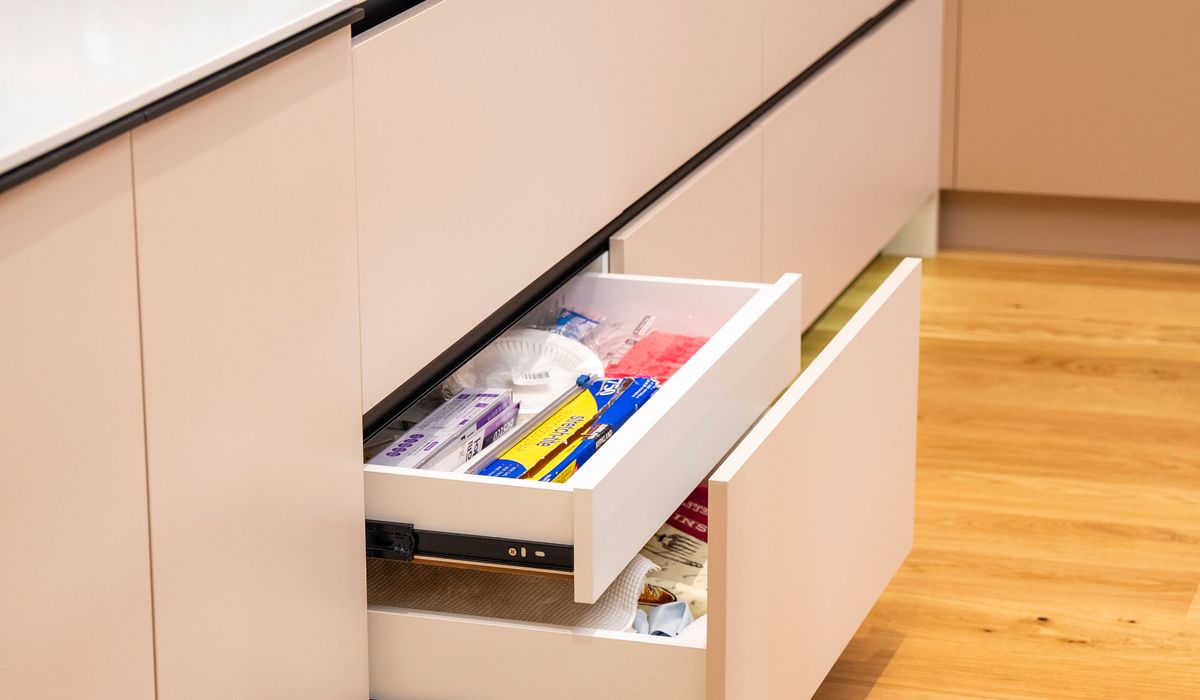
- One shelf or one drawer each, at eye level. Not a shared shelf with a polite imaginary dividing line. Physical separation stops the slow creep of someone else's paperwork onto your side.
- Label everything you put away. A label maker, or masking tape and a marker, is plenty. "Tax 2025", "Client files", "Spare cables". You'll thank yourself in March.
- Keep a shared zone for genuinely shared things — the printer, the hole punch, the stapler, the box of envelopes. Put it on a small trolley in the middle of the room, not on either person's desk.
- Use vertical space. A wall-mounted shelf at 1.8 metres costs very little and clears an enormous amount of desk.
If you can stretch to it, a two-drawer filing cabinet with a lock on one drawer each is a surprisingly good investment. For smaller spaces, an under-desk trolley that slides away in the evening keeps the room feeling like a home rather than an office.
Agree quiet hours before you need them
Nobody wants to negotiate at 9.55am with a client already dialling in. Sit down together once and write out the week.
- Block out protected quiet time. If one of you has calls every Tuesday and Thursday morning, the other takes those slots for deep work with headphones on, not for a catch-up with a friend.
- Build in a buffer. Back-to-back calls with no gap means the room never gets a chance to breathe — or for anyone to make a cup of tea in peace.
- Agree a visual signal. A small sign propped against the back of a laptop lid, or simply headphones on, means "I'm live, please don't speak to me". It works far better than a whispered conversation about whether it's a good time.
- Decide which room takes the calls. If a bedroom or hallway is free, use it for anything confidential. The walls in most British homes are thinner than anyone admits.
Kit that genuinely earns its place
You don't need much, but a few items punch well above their price.
- Noise-cancelling headphones — one pair each. This is the single best purchase you'll make. Over-ear for the person doing deep work; in-ear with a boom mic for the person on calls.
- A proper desk lamp each. Two small pools of light beat one overhead bulb, especially on dark January afternoons, and they let one person work while the other rests their eyes.
- A folding screen or a tall bookcase. Even a partial divider gives the illusion of a separate room and softens sound considerably.
- Extension leads with individual switches. One flick at the end of the day and the whole desk goes dark — no crawling underneath to unplug things.
- Felt pads and a desk mat. Small things, but they cut the clatter of a keyboard and a mug being set down.
Keep shared surfaces clear, personal space personal
Make it a house rule that the desk surface is cleared at the end of each working day — laptop closed, mug taken away, papers into the drawer. Nothing sours a shared room faster than the sight of someone else's unfinished work at eight in the evening.
Give each person a shallow tray or a document wallet for "in progress" items, so nothing has to be filed away mid-task. A small charging drawer, with a multi-way hub inside, stops cables from colonising the desk.
Make it a habit, not a one-off
Any system drifts. Set a ten-minute reset every Friday afternoon: empty the bins, wipe the surfaces, return stray pens and chargers to their homes, and check whether anything needs restocking. Once a month, take twenty minutes to ask each other honestly what's working and what isn't.
Shared workspaces rarely fail because there isn't enough room. They fail because nobody agreed the rules in advance. Get the zones, the quiet hours and the headphones sorted, and you'll find two people can comfortably share a single room — even in the weeks when everything lands at once.






John Doe
14 January, 2022Having no content in post should have adverse..
Chauffina Carr
10 April, 2022We use these tests all time! Killer stuff!
Jim Séchen
16 July, 2022Thanks for all the comments, everyone!