

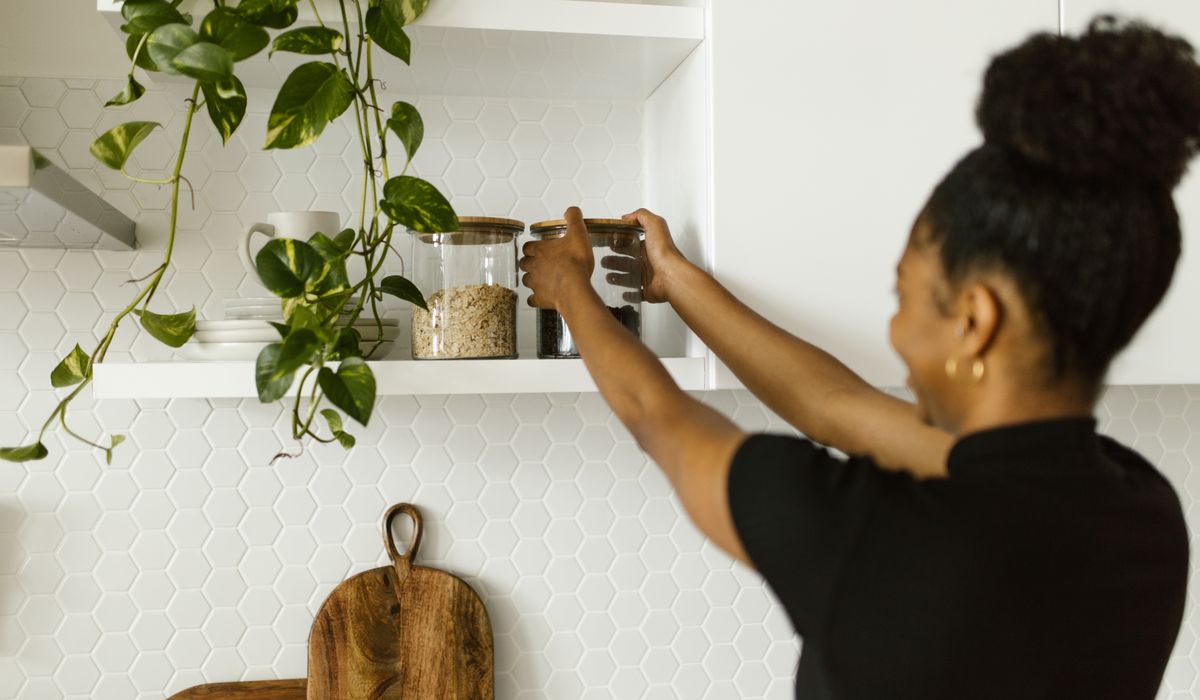
A rented kitchen rarely looks the way you'd choose. Perhaps the cupboard doors are a dated oak, the tiles are a shade of beige that only exists in rental properties, and the handles are the sort of thin metal bar that's been standard since the 1990s. The good news is that you don't need a fitter, a fortnight off work or a landlord's signature on a major works form to change how the room feels. You need a Saturday, a modest budget, and a healthy respect for your deposit.
Start With Your Deposit in Mind
The golden rule of renting is simple: anything you add should be removable without trace. That means peel-and-stick rather than adhesive-and-pray, and screw-on rather than drill-fresh-holes. Before you buy a single thing, take dated photographs of every wall, tile and cupboard door. Keep the original handles, screws and light fittings in a labelled freezer bag or shoebox, and store it somewhere you'll actually find it in eighteen months' time.
Check your tenancy agreement for the clauses on decoration and alterations. Most standard agreements permit minor, reversible changes, but ask in writing if you're unsure — a friendly email to the letting agent costs nothing and protects you. Wear and tear is expected. Damage is not. The difference is usually whether you put it back.
Tile Stickers and Peel-and-Stick Surfaces
Vinyl tile stickers are the single most effective change you can make to a tired rental kitchen. A pack of 20 to 30 squares, usually in the region of 10cm to 15cm, can cover a small splashback in an afternoon and costs less than a takeaway for four.
- Choose matte over gloss. Shiny vinyl catches the light and looks like plastic. A subtle matte or slightly textured finish reads as real tile from a metre away.
- Clean and degrease first. Warm water and washing-up liquid, then dry completely. Adhesive will not grip a greasy tile, and kitchen splashbacks are always greasier than you think.
- Align to the grout lines. If your stickers sit square to the existing grid, the eye reads continuity. If they sit at a slight angle, the eye reads "sticker".
- Order 10% extra. Corners around sockets and window reveals will eat into your supply, and you cannot buy a matching batch six months later.
Peel-and-stick vinyl also works on plain worktops, but keep it well away from the hob and any area that takes a hot pan. A separate heat-resistant mat or chopping board is a sensible companion. Cupboard door wraps are possible, though they demand patience, a smoothing tool and a steady hand around the edges.
New Handles, Same Holes
Swapping handles is the highest-impact, lowest-risk change in the whole kitchen. Before you buy, measure the hole centres — the distance in millimetres between the centres of the two screw holes — on a cupboard door and on a drawer front. Common sizes are 96mm, 128mm and 160mm. Buy replacements with matching centres and you simply unscrew the old and screw on the new, with no drilling at all.
Brushed brass, matte black and simple stainless steel all photograph beautifully and cost very little per handle. You can mix a longer bar handle on drawers with a smaller knob on doors, but keep the finish consistent. Bag up the originals as you go, screw by screw.
Freestanding Storage and No-Drill Fixings
If your rental kitchen lacks cupboard space, look at what you can bring in on legs rather than fix to a wall. A slimline shelving unit 30cm deep fits alongside a fridge or in a dead corner, and a butcher's trolley adds a work surface and two shelves in one. Both move with you when you leave.
- Tension rods in a window recess or between two cupboards will hold hanging utensils, tea towels or a small rail of mugs.
- Over-door hooks turn an airing cupboard door into useful storage for cloths and brushes.
- Magnetic strips fixed to the side of a fridge hold knives and small tools without touching the fabric of the building.
- Stackable baskets and under-sink pull-out trays make the cupboards you do have work considerably harder.
Drilling into tiles should be a last resort. If it's genuinely necessary, ask first and fill the holes properly when you leave.
Light, Colour and the Finishing Touches
Rental kitchens are often lit by a single bulb doing too much work. Plug-in LED strips with adhesive clips can run along the underside of wall cupboards and plug into an existing socket — no electrician, no wiring, no argument. Battery-powered puck lights do the same job inside dark cupboards for a few pounds.
The ceiling shade is usually fair game too. Store the original in your box and hang one you actually like. Beyond that, pick one accent colour and repeat it in two or three places: a washable runner by the sink, a set of matching jars, a decent tea towel, a herb pot on the windowsill. Restraint is what separates "styled" from "cluttered".
Taking It All Down Again
Start removal a week before you move, not the night before. Warm stubborn adhesive with a hairdryer on a low setting, then peel slowly at a shallow angle. Any residue usually shifts with a little white spirit or a dedicated sticky-residue remover — test it on a hidden patch first. Refit the original handles and shade, remove every hook and strip, and give the surfaces a proper clean.
If you've made a change that genuinely improves the property, tell your landlord in writing and offer to leave it. Most will be pleased. Either way, you'll hand back a kitchen that looks better than you found it, and a deposit that comes home with you.






John Doe
14 January, 2022Having no content in post should have adverse..
Chauffina Carr
10 April, 2022We use these tests all time! Killer stuff!
Jim Séchen
16 July, 2022Thanks for all the comments, everyone!