

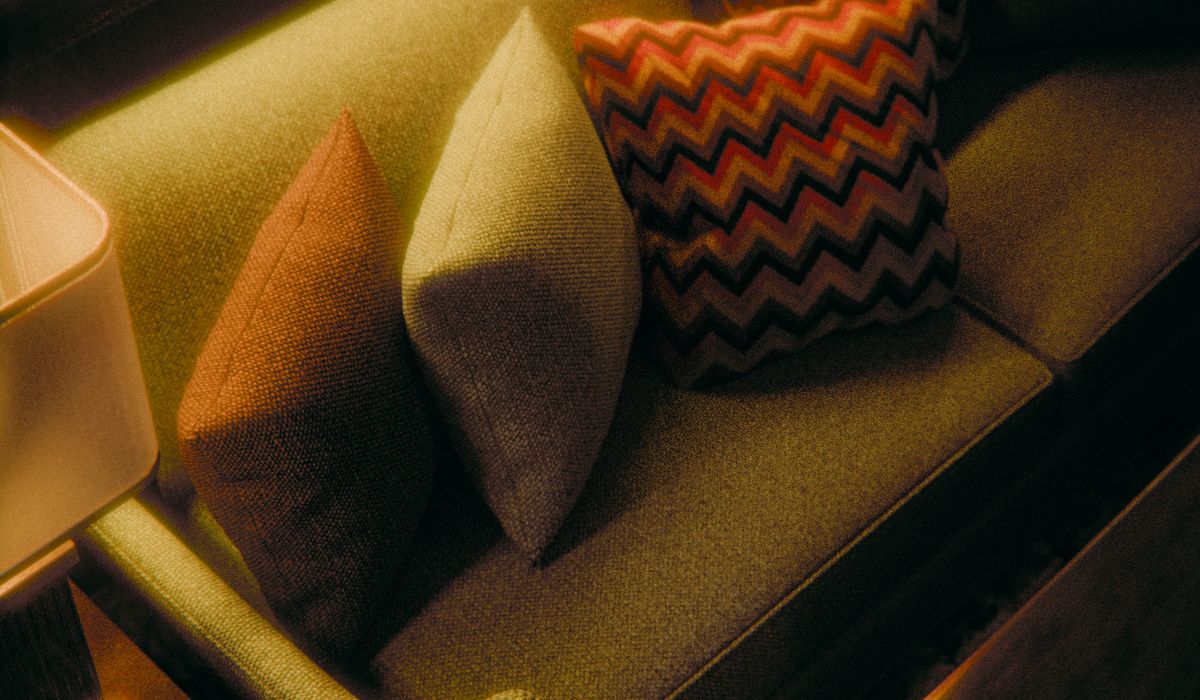
Start with the corner you already have
Most people assume a home office needs a spare room. It doesn't. A workable desk needs roughly 100–120cm of width and 50–60cm of depth, and in a small flat that space is usually hiding somewhere: the alcove beside a chimney breast, the wall between the sofa and the window, the dead end of a hallway, the gap behind the door that never quite opens flat. Before you buy a single thing, put a dining chair in the spot, sit down with your laptop for twenty minutes and notice three things. Do your elbows clear the wall? Is there a socket within reach of a short extension lead? Does daylight fall across your screen or behind it?
Then measure properly and write the numbers down. A desk surface at 72–75cm suits most adults sitting on an ordinary chair; if you are tall, add adjustable feet or aim for 78cm. Depth matters more than width in a tight room — a 45cm-deep top will hold a laptop, a notebook and a mug, and it will not swallow the floor space you need to push a chair back. If you can pull the chair out by 80cm without hitting a bed, you have a genuine workspace.
Fold-away desks and surfaces that disappear
The best small-flat desks are the ones you can close. There are several routes, and all of them work better than a cheap full-size desk wedged into a corner.
- Fold-down desks: a shallow top on hinged brackets that drops flat against the wall. Check the bracket's load rating and fix into studs or use hollow-wall anchors rated well above your kit's weight.
- Drop-leaf and gateleg tables: half the depth when folded, full depth when you are working. Ideal if the desk also needs to be a supper table.
- Chests and consoles: a 40cm-deep console behind the sofa, or a chest of drawers with a hinged lid that turns the top into a desk and stores the paperwork inside.
- Ladder and wall-ladder desks: narrow, tall, and brilliant in a hallway, with two or three shelves built in above the worktop.
Whatever you choose, keep the working surface for the keyboard and your hands only. A printer, a stack of files and a pot of pens will eat 20cm depth you cannot spare. Put a cable cut-out or a clip-on cable tray on the back edge so charging leads do not crawl across the desk, and leave a 10cm gap behind the desk for airflow and for plugs.
Go up the wall, not out into the room
Vertical storage is what turns a corner into a room. Run two shelves above the desk, spaced 35–40cm apart, with the lowest one around 45–50cm above the worktop so a monitor or an open laptop lid clears it comfortably. If you rent, ask before drilling — most landlords will agree to shelves if you promise to fill and paint at the end of the tenancy, and it is worth asking in writing. Where drilling is out of the question, use freestanding tall shelving, floor-to-ceiling tension poles, over-door hooks or removable adhesive strips rated for the weight.
Be honest about what belongs at eye level. Everyday things — notebook, headset, pens, glasses — should be within arm's reach while seated. Archival paperwork, spare tech and printer paper can live on a high shelf near the ceiling or in a lidded box under the bed. A slim wall organiser or a painted pegboard above the desk keeps the surface clear without adding furniture. And do test the reach: if getting a stapler requires standing up and moving the chair, you will stop using it.
Light it properly, especially in winter
Poor lighting is the main reason a small workspace feels grim by four o'clock in a British November. Sit side-on to a window rather than facing it or turning your back on it; direct sun behind a screen creates glare and a screen against a bright window means squinting all afternoon. A roller blind or a light voile curtain gives you control.
Add a task lamp with an adjustable arm and a warm-neutral bulb around 3000–4000K, roughly 400–600 lumens, positioned to the side opposite your writing hand so your own shadow does not fall on the page. A ceiling light behind your head will simply bounce off the screen. If the room has only one overhead fitting, a small uplighter behind the monitor lifts the wall and softens the contrast, which is far kinder on tired eyes at the end of the day. A plug-in timer is a cheap way to make the workspace lamp come on before you sit down.
Make the seat and the air comfortable
Spend your money on the chair before the desk. You want adjustable height, a seat you can sit back into, and something supporting the small of your back — a firm cushion strapped to a kitchen chair is a perfectly respectable solution. Rest your feet flat on the floor or on a sturdy box. Raise the screen so the top third sits at eye level using a stack of books, a dedicated riser or a wall bracket, and keep the screen about an arm's length away.
Sitting still makes you cold, so plan for it: a low-wattage heater aimed at your legs, a throw over the back of the chair, a hot-water bottle at your feet. Sound matters too — a rug, a heavy curtain, a draught excluder along the door and a pair of headphones will make a thin-walled flat feel far more private. Open the window for ten minutes every few hours; stuffy air does more damage to concentration than noise.
Turn it back into a living room at six o'clock
A workspace that never closes will slowly take over the flat, so give yourself an end-of-day ritual. Fold the desk down, close the lid, drop the laptop into a drawer or a lidded box, and put the paperwork in one place — a single document wallet or basket, not four piles. A folding screen, a tall bookcase used as a room divider, or a curtain on a track that pulls across the alcove will hide the whole setup in seconds and stop work from catching your eye during dinner.
Finally, think about the next move. Anything you fix, you should be able to undo, and anything you buy should be light enough to carry up a stairwell by yourself. If your desk, chair, shelves and lamp can all come down in an afternoon and go up again in a different flat, you have built something better than a home office — you have built a workspace that travels with you.






John Doe
14 January, 2022Having no content in post should have adverse..
Chauffina Carr
10 April, 2022We use these tests all time! Killer stuff!
Jim Séchen
16 July, 2022Thanks for all the comments, everyone!